From the outset of the July uprising’s legal proceedings, I warned relentlessly and in full view of the public that the trial was burdened by the contradictions embedded within its own design.
That warning now feels less like cautious speculation and more like prophecy. What I feared is now unfolding, piece by predictable piece, and the next chapters may prove even darker.
The most glaring flaw was foundational. The tribunal itself. To try Sheikh Hasina in a court she personally engineered was to invite suspicion before the first witness even spoke.
It arms her defenders with an enduring claim–that this was not impartial justice, but a reckoning engineered by political enemies.
And when such a trial intersects with that widely circulated clip of Salauddin Quader Chowdhury declaring that Hasina herself might face judgment in this very tribunal someday, symbolism becomes judicial gravity.
In a political environment where grievances are inherited and remembered, these moments are not forgotten. They define the moral atmosphere in which justice is interpreted.
A second failing was procedural. And deeply political. A trial of this magnitude demanded every conceivable safeguard against actual or perceived bias. Instead, the authorities walked directly into the most obvious trap.
It appointed a prosecutor who is a political foe of one of the defendants. This was neither a necessity nor an inevitability, rather it felt like a deliberate decision. And a reckless one.
Judicial credibility is not only about what a court decides, but about whether the process can survive the harsh glare of history and public doubt.
And of course politics.
Questionable international standard
The third failure was international and legal.
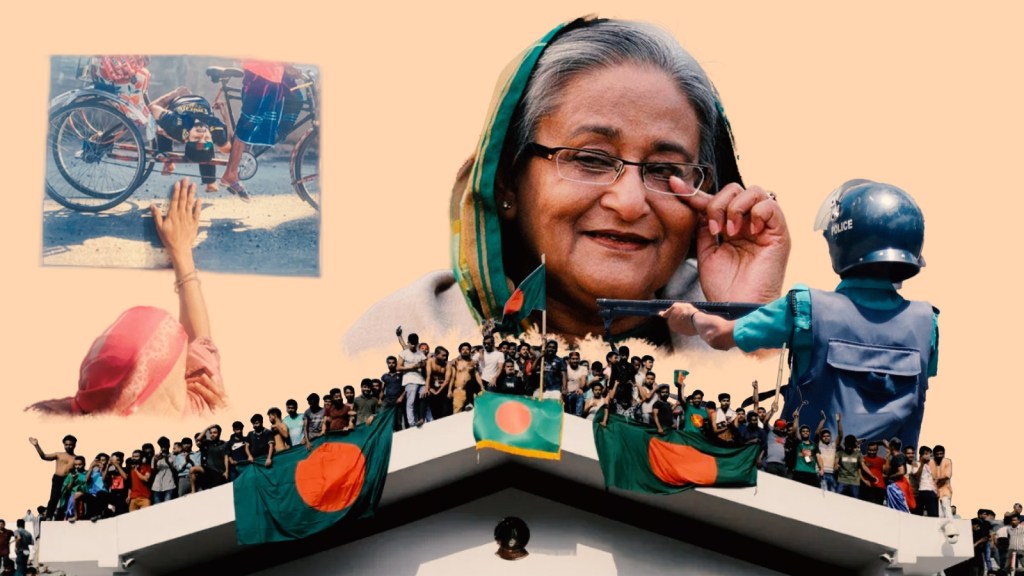
Around the world, justice systems observe a near-consistent standard. When the accused is tried in absentia, capital punishment is not imposed.
This precedent exists for a reason–to ensure that the moral force of justice is not tainted by the optics of a one-sided proceeding.
The tribunal could have affirmed the gravity of Hasina’s alleged crimes, noted that they merit the ultimate penalty, and then–out of respect for global norms–reduced the sentence to life imprisonment until such time as she returns to face the court in person.
That would have signaled restraint rather than retribution.
Chief Prosecutor Advocate Tazul Islam argued that any court in the world would have reached the same verdict. Perhaps.
Maybe in a flawlessly run trial, with unassailable procedure and unimpeachable impartiality, Hasina’s culpability would justify the harshest punishment.
But that argument evades the real question. The issue is not the outcome, rather it is the solidity of the path taken to reach it. Procedural legitimacy is the oxygen that allows a verdict to survive beyond the courtroom.
Had the prosecution built an airtight, apolitical, internationally defensible case, it would have left Hasina’s allies with nothing but silence, or confession.
Instead, doubts now have oxygen. Critics have language. And the trial’s legacy, rather than being one of legal clarity, risks becoming one more contested wound in a political history already thick with them.
In academic research, even a modestly accepted hypothesis must be built brick by brick–seven or eight thousand words of argumentation, dozens of citations, painstakingly curated evidence–before it’s allowed to stand.
A judicial process, especially one that decides between life and death, demands a standard even higher than that.
Yet this trial lacked that very rigor–and that vacuum of discipline has now enabled certain civil society voices to draw crude parallels between Hasina’s trial and the contentious prosecutions of Jamaat leaders.
Those comparisons would have evaporated instantly had the proceedings been watertight.
A better way could have been chartered
And it never had to devolve this way.
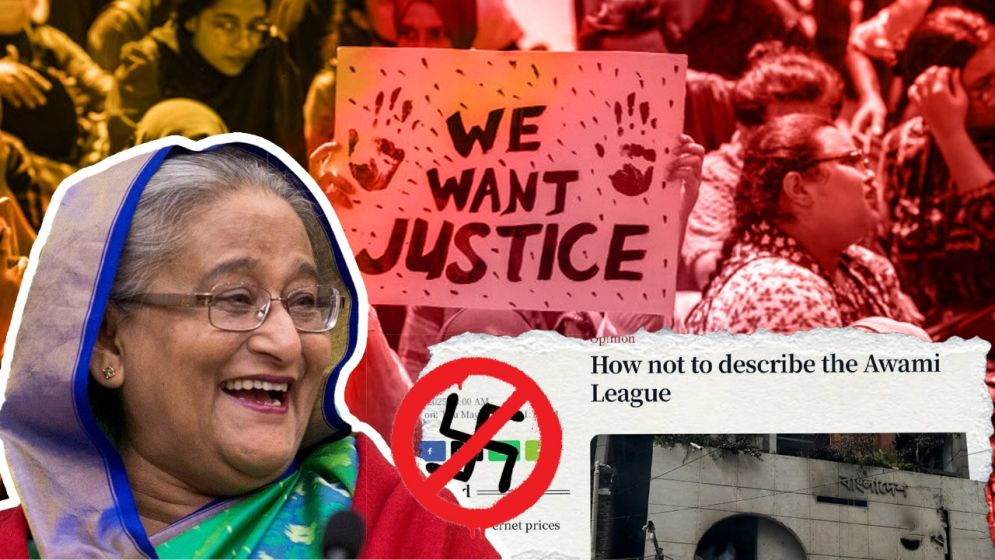
Bangladesh had a genuine chance–even now, arguably still has one–to conduct a trial that could have been a global model. The July massacre was already under formal UN investigation; the door was open to international participation.
UN legal experts could have been invited, or a hybrid tribunal established with formal oversight. In the charged political reality of Bangladesh, involving neutral actors would not have weakened sovereignty–it would have fortified legitimacy.
Instead, the proceedings remained domestically controlled, domestically interpreted, and domestically doubted.
The tragedy, then, is not merely the perception that this trial was politically colored. The deeper failure is that an extraordinary nation-defining moment–to establish a gold standard of depoliticized justice–was squandered.
When justice is seen as an extension of political vendetta rather than a neutral arbiter of right and wrong, it ceases to mend wounds. A death sentence handed down on shaky procedural footing hardens divisions.
The July massacre trial will undeniably become a milestone in Bangladesh’s legal and political narrative. But history will judge it not by its verdict, but by its architecture.
Justice is more than determining guilt; it is a demonstration of restraint, of fairness, of procedural integrity so sturdy that even adversaries are forced to acknowledge it. Lacking that foundation, even the most justified punishment rings hollow.
Bangladesh could have charted a wiser course–anchored in international norms, institutional impartiality, and exemplary legal craftsmanship. It chose otherwise.
And that choice will resonate–through politics, and through generations.
Note. The article was originally appeared in BanglaOutlook and can be found here https://en.banglaoutlook.org/editors-pick/235851

 Abu Taib Ahmed
Leave a comment